Pages

Thursday, June 9, 2011

Albatross Colony - Otago Peninsula, New Zealand

Albatross wing span

We finally went out to the Royal Albatross Colony at Taiaroa Head, on the tip of the Otago Peninsula.
It is the only mainland breeding colony for any albatross species found in the southern hemisphere.

We have been putting it off because it is so expensive for us to go as a family, but finally a coupon on "Grab One" became available for half price.

* If you travel or live in NZ or Australia, Grab One is an awesome resource for getting half price deals on all sorts of stuff. Sign up online for free, then you get daily deals emailed to you -   Grab One Website

Baby Albatross (http://www.albatross.org.nz/images/homepic1.jpg0
ANYWAY! What is so great about a bird?  They roam farther than any animal on earth! The Royal albatrosses are masters of the air with a wing span that is 3.5 metres long!

  Albatrosses spend most of their lives at sea. They only come to land to make their nests and have babies!.

We were lucky that the Colony had 23 chicks being raised on the headland. They were fluffy, white and about 4 months old now. Their nest sites seemed a little pitiful to us. They have no shelter and were exposed to wind and rain. We watched the chicks sit patiently in their nests waiting for their parents to bring back food.

The kids holding "fake Albatross babies" to feel the weight. The older babies can weigh the same a the parents _10 kilograms (22 lbs)

Watching with Binoculars in viewing hut.
See the chicks in their nests exposed to the elements? HARDY!

It’s hard getting airborne when you’re so big.
That’s why albatrosses choose nest sites on cliff edges. They can take off on the wind that rises as it hits the cliff. Running start helps too since their wings do not have muscle in them. Their shoulder area holds the stregnth for the wings.


Surprisingly, they hardly flap their wings - mostly soar when flying. They are so highly efficient in the air, that they use dynamic soaring and slope soaring to cover great distances with little exertion. They feed on squid, fish and Krill. The birds scavenge the surface of the Sea by seizing or diving.
Alex and Ellie's height compared to the wing span of an Albatross
• The biggest of all, the Royal albatross, flies right around the southern oceans. The Tasman sea is one of the most nasty in the world. They even fly past South America and back to New Zealand across the "Roaring 40s.
Because there is little land below the 40th parallel south, the wind speeds are able to build more intensely than in the same region of the Northern Hemisphere.

http://www.environment.gov.au/biodiversity/science/abbbs/photos.html
Taiaroa Head, on the tip of the Otago Peninsula.
We always have a great experience out on the Pensisula.
All our wildlife viewing activities have been free, so this was the first paid. I think we have been spoiled at Sandfly Bay with Sea Lions and Penguins.

Not sure if I would pay $40 an adult again to go to the viewing hut. We  learned all about the Albatross for free in the visitor center, which is fairly impressive. Also, nobody is promised to witness an Albatross feeding their babies, we acturally only saw an adult fly over us for a moment in the parking lot.
Leaving the Viewing Hut - this area is protected from predators. This is because New Zealand has been geographically separated from other land masses for over 80 million years so the native wildlife has evolved in isolation. Now much of New Zealand’s natural environment has been affected. Possums and Stoats are introduced predators that are reeking havoc on native species.
View from Hut toward Dunedin. The Otago Harbor
Taiaroa Head, on the tip of the Otago Peninsula.
I am going to miss watching the Sea churn below the cliff edges.

Watching the seaweed dance with the waves is like watching a campfire - Hypnotic!

Ellie enjoying the view

Wednesday, June 8, 2011

Lovers Leap and The Chasm, Otago Peninsula, New Zealand

John and I sneaked away mid week to check out The Chasm and Lovers Leap out on the Otago Peninsula. These jems are only 30mins from our home in Dunedin.

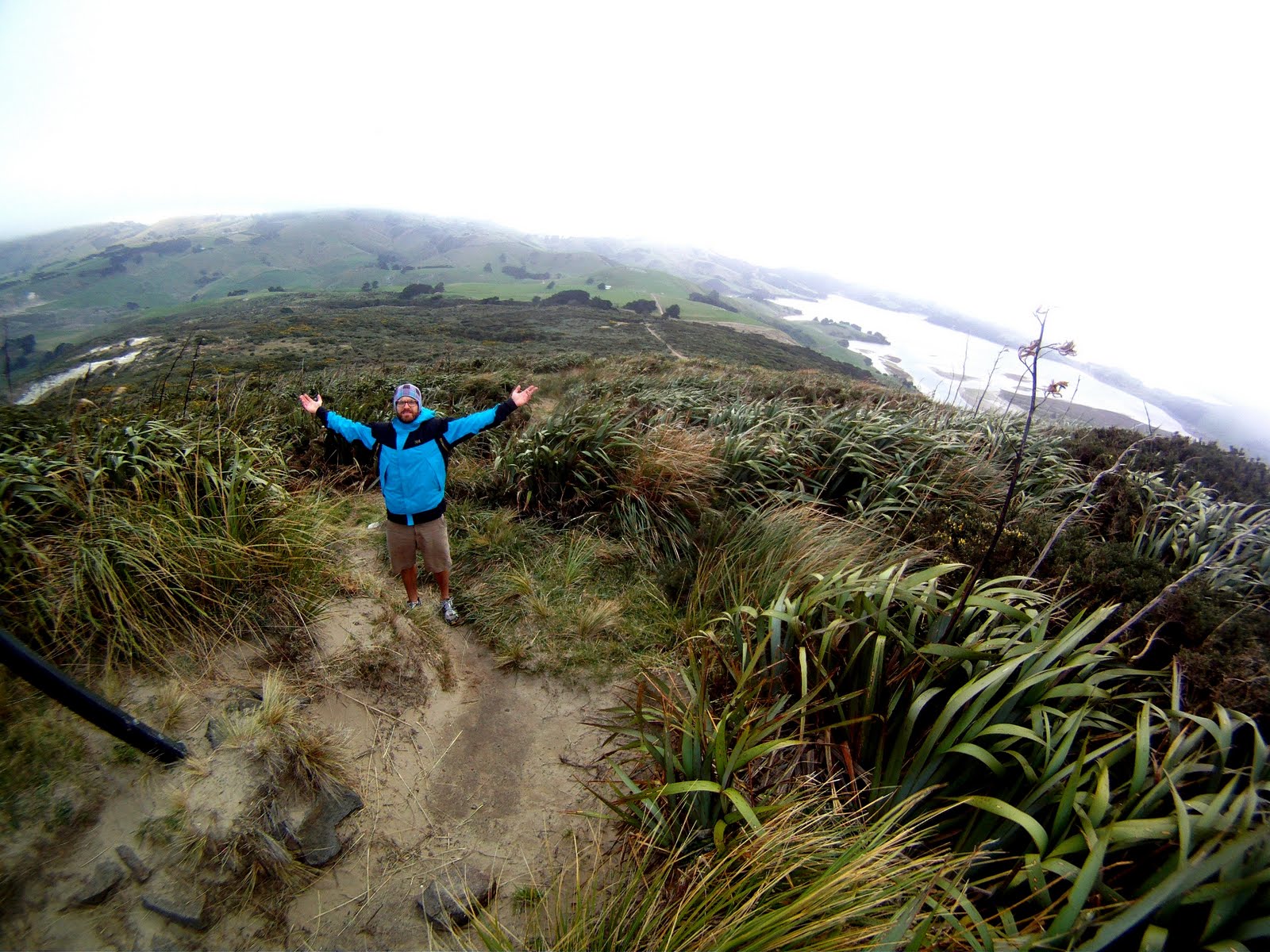
It was a super windy day, so you will notice wild hair! The tracks are located on Sandymount, which I found remarkable because I have never been on a mountian made of sand.


Map view

View of Allens Beach from Sandymount
  The hike begins along a spooky avenue of Macrocarpa pines to a gate by an old farm building. We followed the trail over farmland with a breath taking view of Allens Beach. This track leads directly to the Lovers Leap viewpoint, while a poled track to the left leads to the Chasm


John crossing farm land to Lovers Leap look out. 

John on Sandymount above Hoopers Inlet, NZ
These locations are very impressive, being sheer drops of 200m.
People should use extreme caution with children in these areas as cliff edges are unfenced.
John above The Chasm


The Chasm - Notice how windy the grass is. This geological area is remarkable!


The Chasm is similar although the sea no longer enters into the floor of the notch. It is amazing to me how easy someone could fall down the cliff edge. It looked like there was once a protective fence has been trampled to ground level. It seems now to serve as a potentially lethal cliff-edge trip wire.

Dont fall! Jen above the Chasm!
Other side view of Lovers Leap


The Lovers Leap track leads to a small viewing platform perched on the edge of the cliff.

The sea has carved a notch into the cliff here and tunneled out an arch.

I loved the Basalt columns are visible in the face of the cliff here. These are simular to the columnar basalt at the Organ Pipes on Mount Cargil near our home in the North east valley of Dunedin
View from Lovers Leap - Yikes!

Tuesday, May 31, 2011

Ellies Birthday in New Zealand

Ellie blows out the candles! 11 years old!

Mama Jen and Mama Kate in the hot-tube
Ellie and friends at bottom of water slides
moana pool fun
sweet Anna and Kelly

Monday, May 23, 2011

Ride Your Bike Girls! Advice to get out and get dirty!

Jen ready to conquer world on Buskin Track above sandfly Beach, Dunedin NZ

There are a number of methods mountain bikers use to get over logs and rocks on the trail. Depending on the size of the obstacle, here are some approaches to consider:

1. Pop a wheelie: This is the easiest way to get started and it works best for small logs or rocks. As you approach the obstacle, lift up your front wheel just before you get to it. It may take some practice to get your timing right but practice makes perfect! While this method gets your front tire over the log smoothly, it does nothing to lessen the impact on your rear wheel. Watch your chain ring as well, larger logs and rocks tend to get caught here and can send you into an endo if you’re not careful.
 
2. The bunny hop: Clipping in to your pedals (with either toe clips or clipless pedals) make this a whole lot easier. Make sure you have lots of speed as you approach the obstacle. Just before impact, jump up, carrying your entire bike with you (front and rear wheels) to clear the obstacle. This is risky since if you jump too soon or if you don’t have enough speed you may come down on the log or rock with your rear wheel creating a nasty “taco” out of your rim.

3. The speed hoop: This takes the most skill by far but it’s far more versatile than the other methods and can get you over much larger obstacles.


Sometimes avoiding obstacles doesn't work...

If you’re looking for a new group to ride with this season but don’t know where to start, here are a few ideas!

Head out to the local trail! This is the easiest way to find mountain bikers with similar interests and abilities and definitely the most fun way to do it. Hit up the trailhead on a Saturday morning (or whenever things get busy) and ask folks if you can ride with them. Nine times out of ten they’ll say yes and you can get to know them as you ride. If things go well, ask for contact info afterward and try to schedule another time to meet up.

Join your local MTB club. Mountain bike clubs exist for a number of reasons, not the least of which is for socializing. Pay your dues and show up at the next group meeting or work party and introduce yourself. Many clubs also host group rides at the local trails so check you local club’s website / Facebook group to get the deets. Women That Mountian Bike


Sign up for a race or MTB festival. Some races can be pretty competitive so try to find one that attracts beginners and folks looking to have fun. During warm ups and after the race is a great time to introduce yourself (don’t try to do this during the race – you might get some dirty looks).

Get active online. While some mountain bikers would like to have an automated tool that randomly connects them with similar riders, we think there’s a lot of value in developing friendships online first. What does this look like? For starters, post a bit about yourself and where you like to ride on a web forum where folks from your area tend to hang out. Chat back and forth a bit before asking to meet up for a ride – some people may be uncomfortable with getting together before they feel like they know you.


 Jen and her bike (no those are not tattoos!) but my sweet new arm warmers for cold days.


Pop into your local bike shop. 
Some bike shops host their own group rides and they’re always a great resource for learning about the local scene. Chat up the employees and they should be able to help you find ways to get connected.
The great thing about all these methods is that once you meet one or two mountain bikers they’ll introduce you to their friends and friends of friends. Before you know it you’ll have a network of riders you can call up at a moment’s notice to meet up at the trail. Over time you’ll narrow in on those with similar skill levels and riding styles and you’ll forget what it was like riding by yourself. Get out there and network now so you’ll have a crew to ride with this summer!


Wednesday, May 18, 2011

Bardsley's go to Austraila!

 Click here for our Youtube channel featuring our latest trip to Australia, http://www.youtube.com/watch?v=4u6Uz_-B504&feature=channel_video_title

Ellie with koala bear - YES! A real Koala!

Sunday, May 8, 2011

Moeraki Boulders, New Zealand

Road trip to Golden Bay! On our first stop, we had fun at The Moeraki Boulders just one hour north of Dunedin. Mom and geeked out on the impressive geology at low tide.
Ellie and Nanna Karen loving up the Moeraki Boulders
Moeraki Yoga
Alex on top!
z
Bardsley family, April 2011